Hydro vs Air-Cooled Miners in Paraguay
Hydro vs Air-Cooled Miners in Paraguay

Sascha Grumbach
Founder & CEO
Zug, Switzerland

Jode Wardell
Head of Operations
Villarrica, Paraguay
Let’s be clear about the problem we’re actually solving in Paraguay.
It isn’t hashrate. It’s heat, humidity, dust, and operational discipline.
Achieving 99.45% in average uptime here doesn’t happen by chance, it’s the outcome of designing around reality, not against it.
As you know Paraguay is hot most of the year. Air systems technically function, but they live close to their limits. Hydro is us choosing to stop arguing with the climate and design around it.
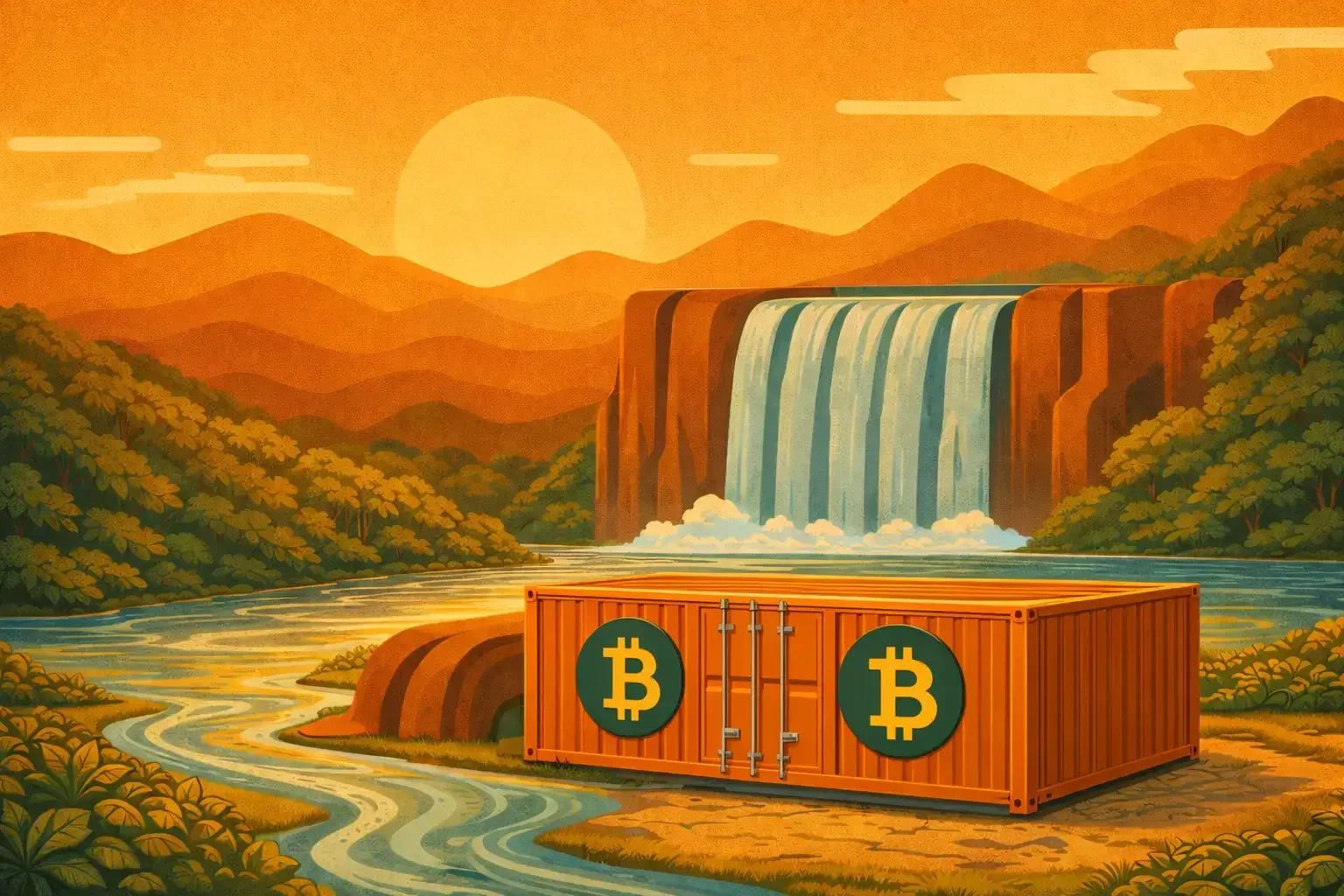
Why We Run Hydro Miners in Paraguay
Uptime beats theory.
Air miners “work” up to ~45°C intake, but near that ceiling they throttle, trip, or underperform. That’s not an edge case here, it's normal operation. Every hour of throttling is BTC not mined.
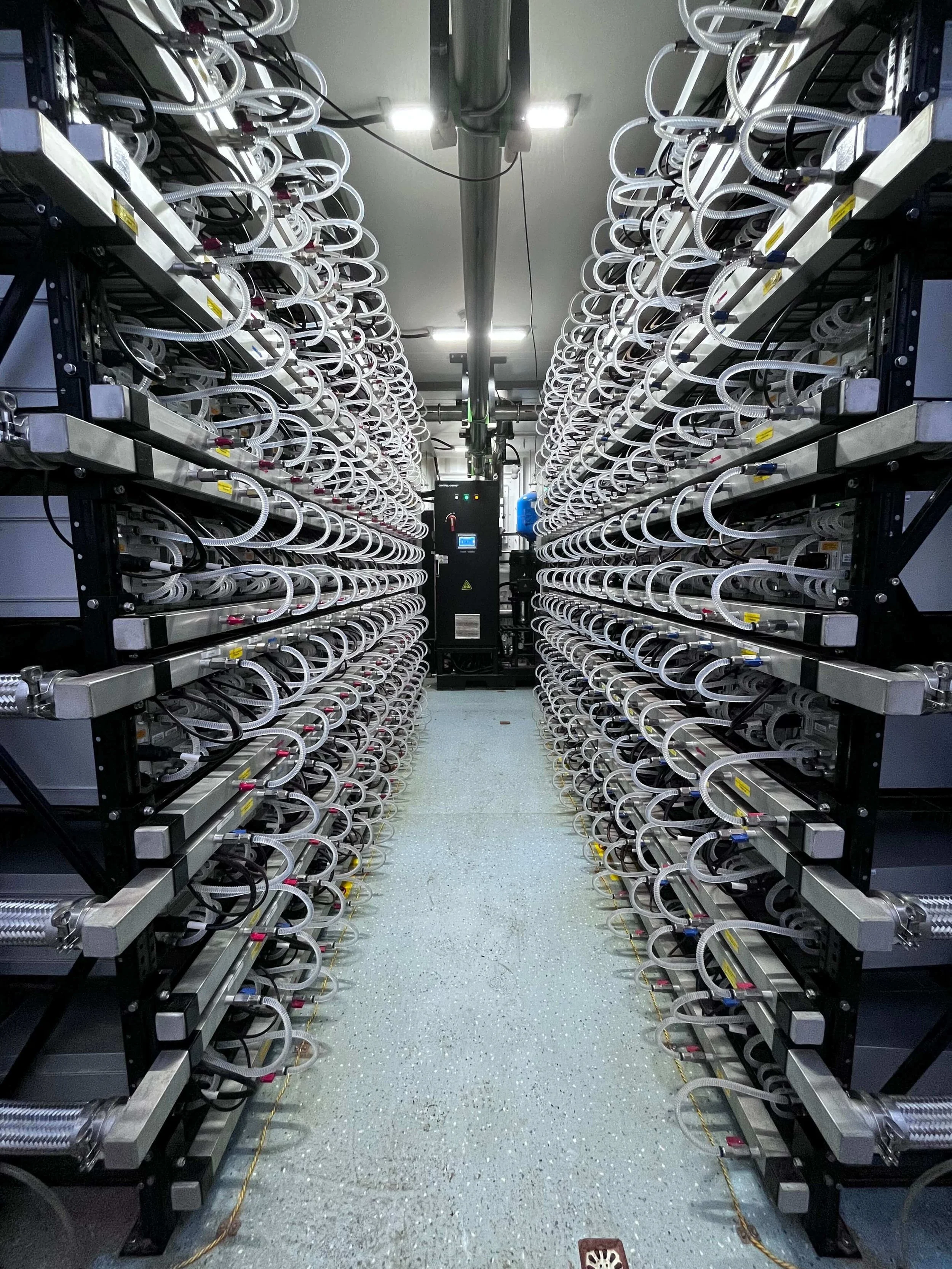
Hydro decouples chip temperature from ambient air. Heat goes into water, chips stay stable, uptime stays predictable.
Heat becomes part of the business model, not a nuisance.
With hydro, heat is already in a controlled water loop. That makes heat reuse practical, not aspirational.
We use that heat directly in our fruit drying facility. This isn’t waste heat in theory. It’s process heat in practice.
The drying operation sits downstream of the mining loop and turns otherwise rejected energy into a second revenue stream. Same electrons, same megawatts, more output.
Air-cooled systems can reuse heat, but you’re working with low-grade hot air, large volumes, and poor control. Hydro gives us stable temperatures, predictable flow, and something we can engineer around.
Density and noise matter at scale.
Hydro allows higher compute density per container and dramatically lower noise. Fans are consumables and a constant failure point in Paraguay conditions. Hydro shifts wear into pumps and heat exchangers, which are easier to monitor and maintain systematically.
What Hydro Actually Costs
More capex and more responsibility.
Hydro means miners plus pumps, piping, plate heat exchangers, filtration, water treatment, controls, spares. This only works if you’re willing to run it like an industrial system, not a shed full of fans.
Failures are less frequent but higher impact if you’re careless.
Air failures are usually single-machine events.
Hydro failures can affect a loop if redundancy and monitoring are poorly designed. That’s why engineering and maintenance discipline matter more than brand choice.
Water is now a first-class operational risk.
Leaks, chemistry, fouling, corrosion. All manageable, none ignorable.
Less plug-and-play mobility.
Air miners are modular and easy to redeploy. Hydro sites are systems. If your strategy depends on rapid relocation, hydro is the wrong tool.
Where Air-cooled Still Makes Sense in 2026
Air miners have improved a lot. Top-tier units are efficient and absolutely viable.
Air is still the right choice when:
Speed of deployment matters more than optimization
You want minimal infrastructure and simpler staffing
The site lifecycle is short or uncertain
There’s no plan to reuse heat
In Paraguay, though, air pays a persistent tax in uptime, maintenance, and noise because ambient conditions rarely give us a break.
The Real 2025 Takeaway
Air miners got more efficient.
That didn’t change the climate.
In hot, humid environments, the operation is won on uptime and controllability, not datasheet J/TH.
Hydro lets us:
Stabilize mining performance
Control where the heat goes
Feed that heat directly into a commercial drying facility
Extract more value from the same power input
So the decision isn’t ideological or “green” alone. It’s practical.
We choose plumbing, pumps, and process control instead of wasting energy on hot air and fans. That decision drives our mining operations and makes the model succeed in Paraguay. It’s focused, scalable, and built to outperform.
About Green Mining DAO:
Green Mining DAO enables investors to become co-owners of sustainable Bitcoin mining facilities. GMD develops, owns, and operates tokenized Bitcoin mining data centers, with plans to generate an additional revenue stream by drying fruits from once-wasted heat. Profits are distributed as quarterly dividends in Bitcoin directly to shareholders’ wallets¹. GMD's subsidiary mining (or co-mining) model is designed to maximize dividends for investors, including the company itself, which holds a 20% stake in each subsidiary after the fundraising process. Investors receive common Class-A shares identical to those held by the founders.
Green Mine #003 (GM3), operated by GM3 Technologies AG, is Green Mining DAO’s third sustainable mining project and is currently being developed in Villarrica, Paraguay. GM3 has been operational since the end of 2024, already generating profits since Q1 2025, and is currently being expanded with additional capital.
Media Assets: Green Mining DAO Press Kit
Media Contact: Valentine Pleser
¹Subject to economic success and corresponding shareholder resolution. Past performance is not a guarantee of future returns.